Self-adhesive membranes
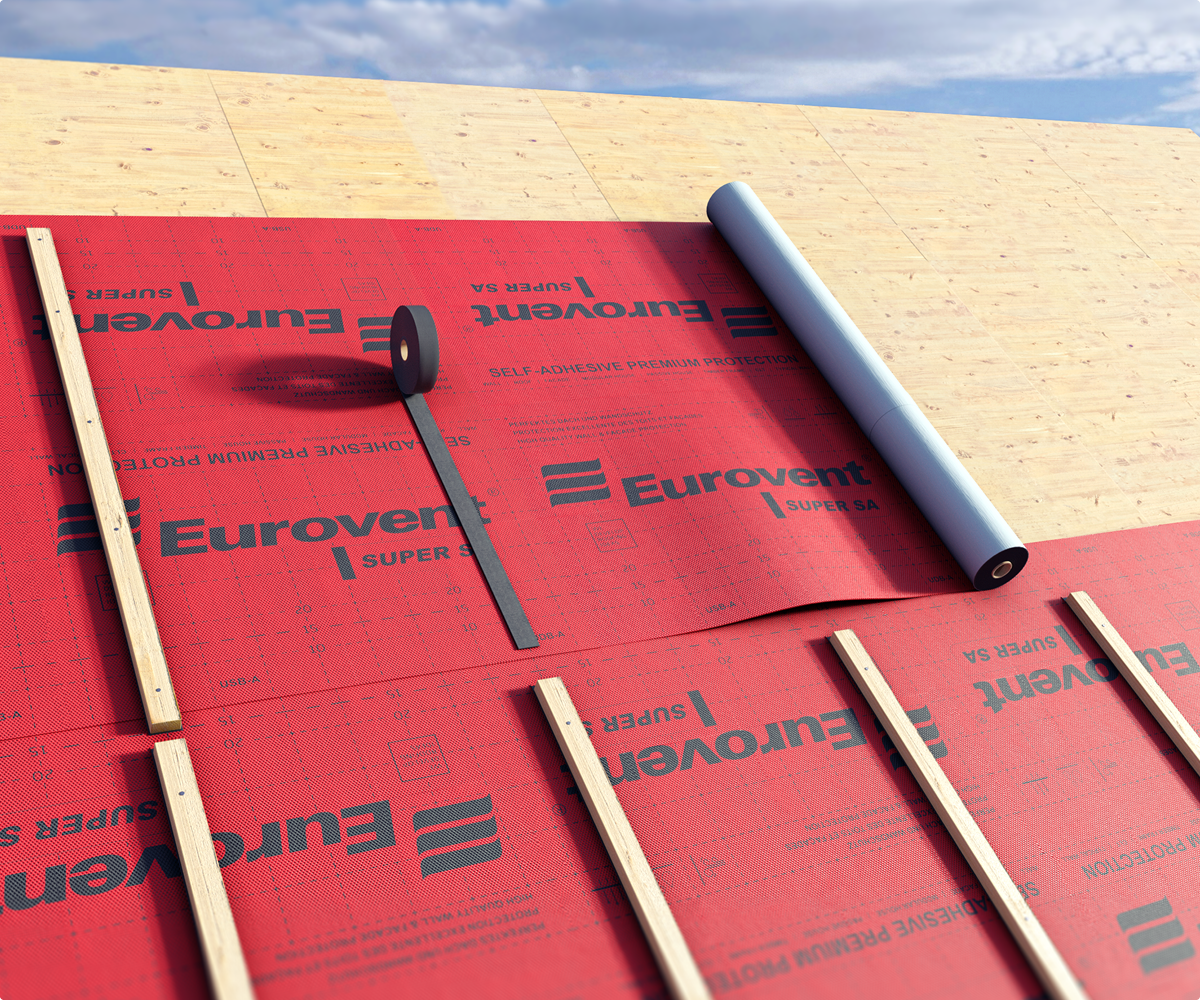
Self-adhesive membranes are modern materials used for sealing roofs, walls, façades and ceilings. Their main feature is an adhesive layer applied over the entire surface of the membrane, which enables a quick and durable bond with the substrate without the need for additional adhesives or mounting tapes.
These solutions are used wherever the continuity of the protective layer shielding the roof or wall from wind, rainwater and moisture is crucial, while still allowing water vapour to escape from the structure.
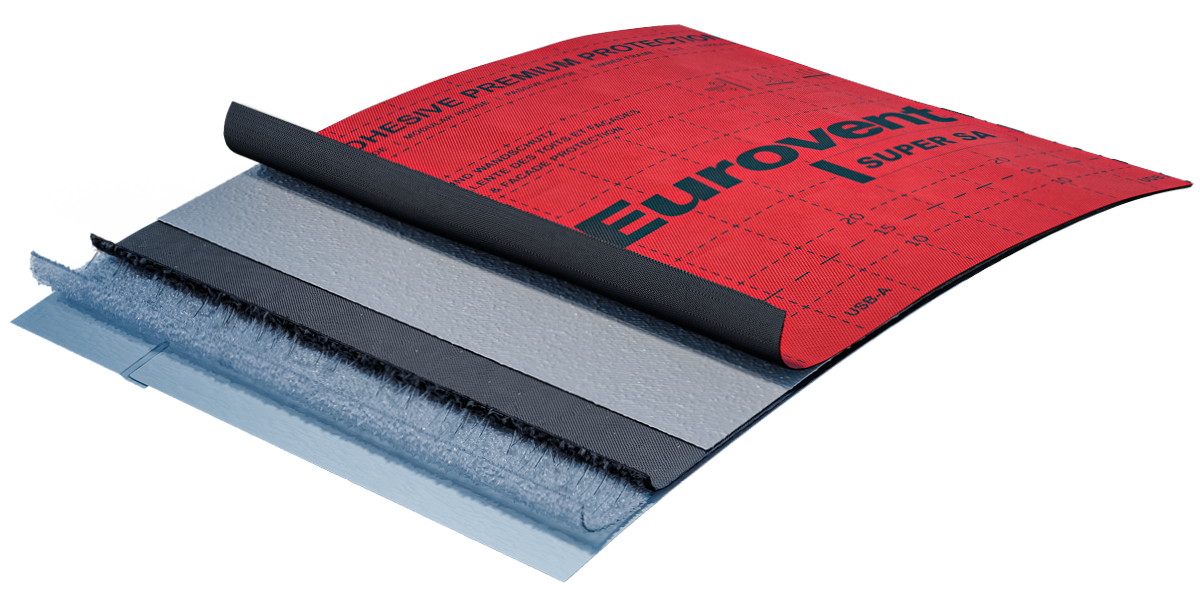
Self-adhesive membranes typically have a multi-layer construction. At their core is a functional layer that protects the roof or wall from water while enabling vapour diffusion. On the installation side there is an adhesive layer — most often acrylic — which is activated by pressure when applied to a properly prepared surface.
As a result:
- the membrane adheres tightly to roofs, walls and ceilings,
- installation is fast and does not require mechanical fastening,
- the risk of leaks in critical areas is significantly reduced.
Membranes of this type can be installed both vertically and horizontally, making them suitable for various structural configurations.
Practical applications
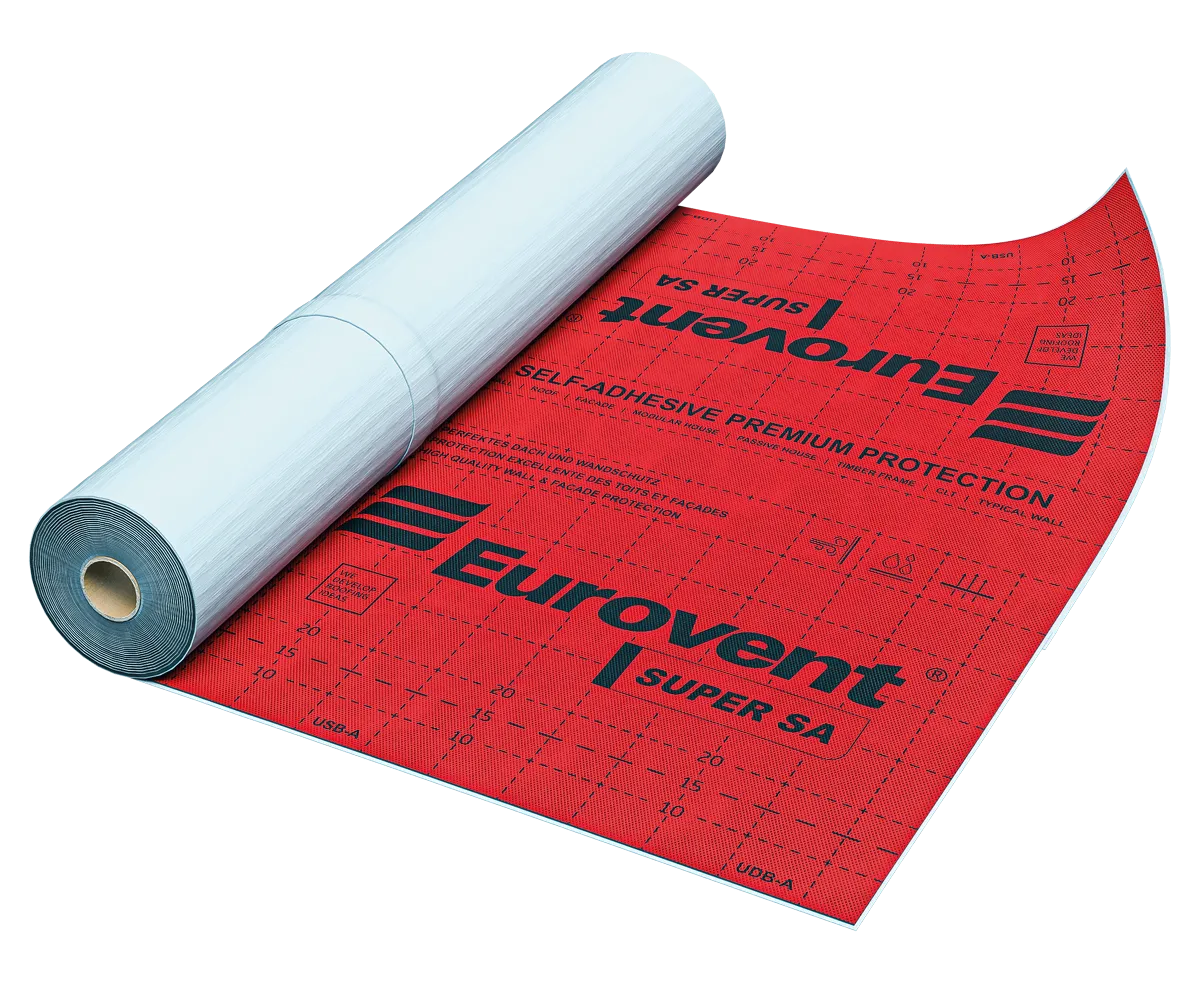
An example of the use of self-adhesive technology is the Eurovent® SUPER SA membrane. It is used as a protective and sealing layer in pitched roofs and external walls, particularly in timber-frame construction, prefabricated buildings and CLT (cross-laminated timber) structures.
Thanks to the full-surface acrylic adhesive layer, the membrane:
- adheres very well to wood, wood-based panels, concrete and gypsum boards,
- creates a tight protective layer on roofs and façades,
- reduces uncontrolled air leakage and moisture penetration within structural layers.
Why is self-adhesive technology gaining importance?
In modern construction, increasing attention is being paid to the airtightness of roofs, walls and façades, as well as to reducing heat loss. Self-adhesive membranes make it possible to:
- shorten installation time,
- reduce the number of joints requiring additional sealing,
- create a uniform and durable protective layer over large surfaces.
For this reason, this technology is increasingly used in single-family housing as well as in modern prefabricated building systems.
Eurovent® SUPER SA