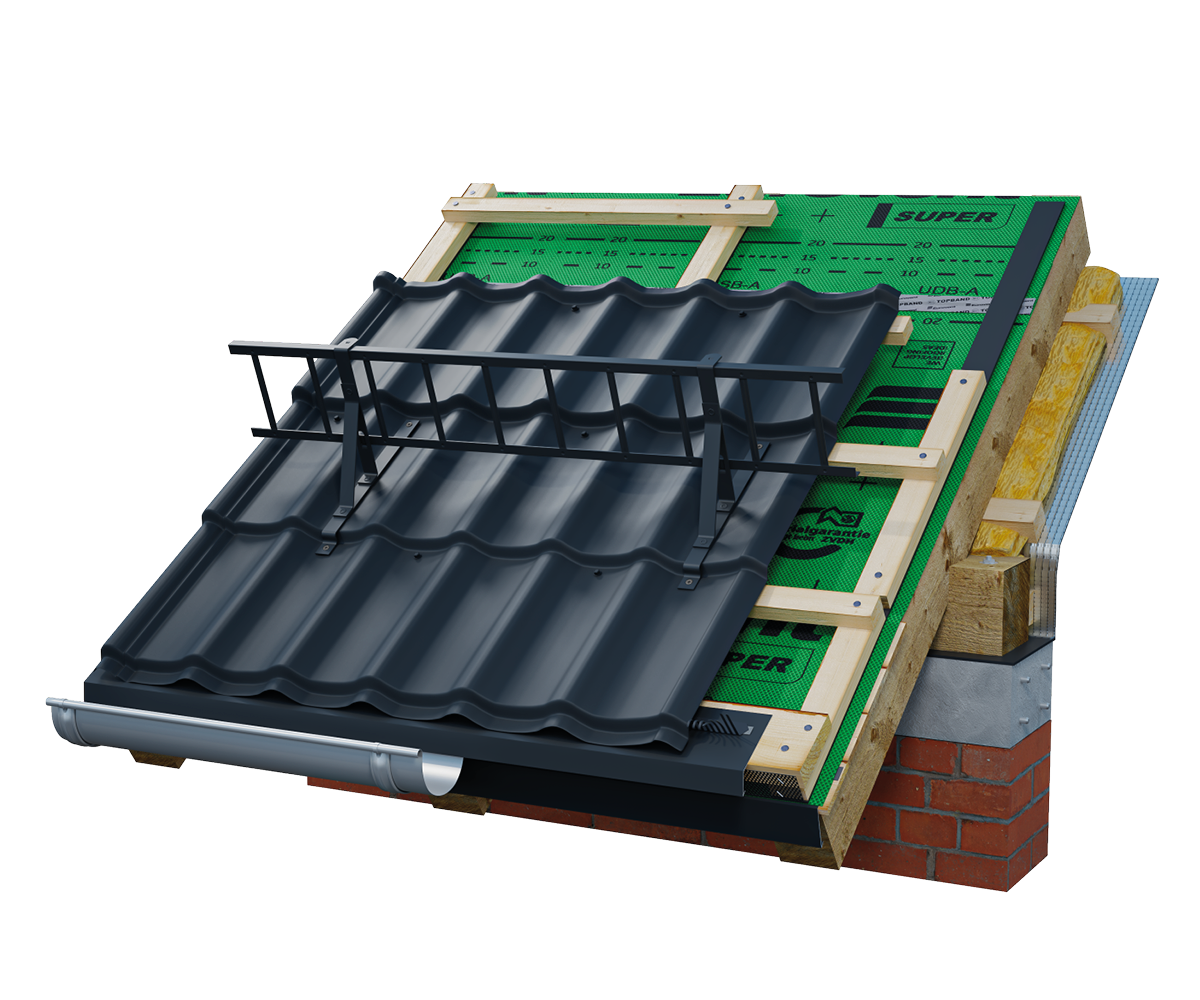
Roof snow protection
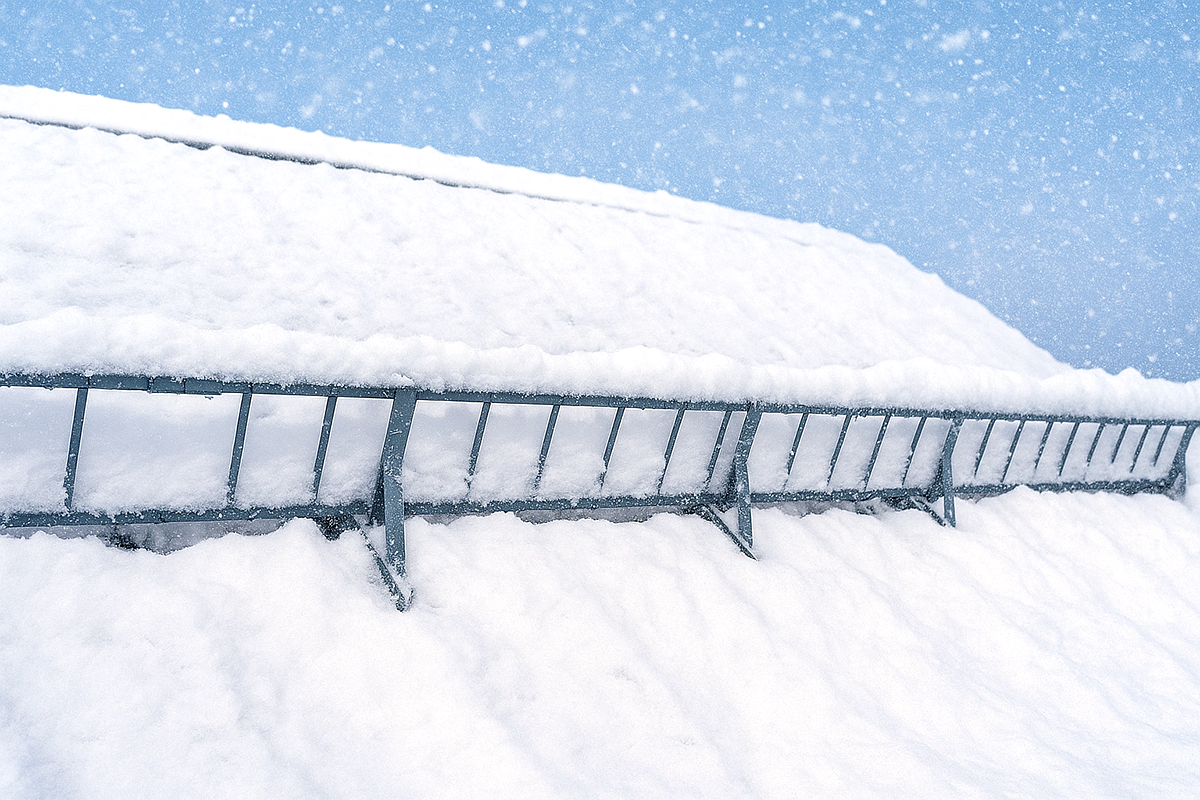
Why is roof snow protection necessary?
Heavy snowfall combined with sudden thaws can cause large masses of snow to accumulate on the roof surface and slide down in a single block. This creates a serious hazard for building occupants, pedestrians, vehicles, plants, façade elements and even the roof structure itself. Current regulations require building owners and property managers to ensure safety by installing appropriate snow protection systems.
Snow protection elements — such as snow guards and snow fences — are designed to break up the snow layer, prevent sudden sliding of snow masses and distribute loads more evenly across the roof surface. For these systems to work effectively, they must be properly selected according to the local snow load conditions.
Snow load zones in Poland – how to read the snow load map
The map presented in the material shows the five snow load zones in Poland, defined according to the PN-EN 1991-1-3 standard. Each zone specifies the characteristic snow load (Qk) expressed in kN/m².
In general:
- Zone 1 and 2 – the lowest snow loads, covering the central and north-western regions of the country,
- Zone 3 – sub-mountain areas and north-eastern regions,
- Zone 4 and 5 – mountainous regions with high snow loads, requiring increased spacing density of brackets and the installation of multi-row snow protection systems.
The standard clearly defines the minimum number of protection elements, their spacing and installation method, depending on the roof pitch angle and the rafter length. The accompanying tables present the recommended number of brackets and the suggested spacing of snow protection systems for different types of roof coverings (such as metal roof tiles and roof tiles) and barrier widths.
This is a practical tool that allows snow protection systems to be properly selected according to local conditions, ensuring compliance with regulations and maintaining full safety for building users.
Installation guidelines for roof snow protection systems
- In zones 1–3, brackets are most commonly installed at 60 cm spacing.
- In zones 4–5 and at altitudes above 1000 m above sea level, the spacing should be reduced to 40 cm.
- For roof slopes longer than 6.5 m, the installation of two rows of snow guards or snow fences is recommended.
- For roofs longer than 8 m with a pitch greater than 40°, it is recommended to install two rows of Eurovent® SNOWSTOP snow fences or tubular systems.
- The final decision should always be based on the design documentation and the classification of the snow load zone.
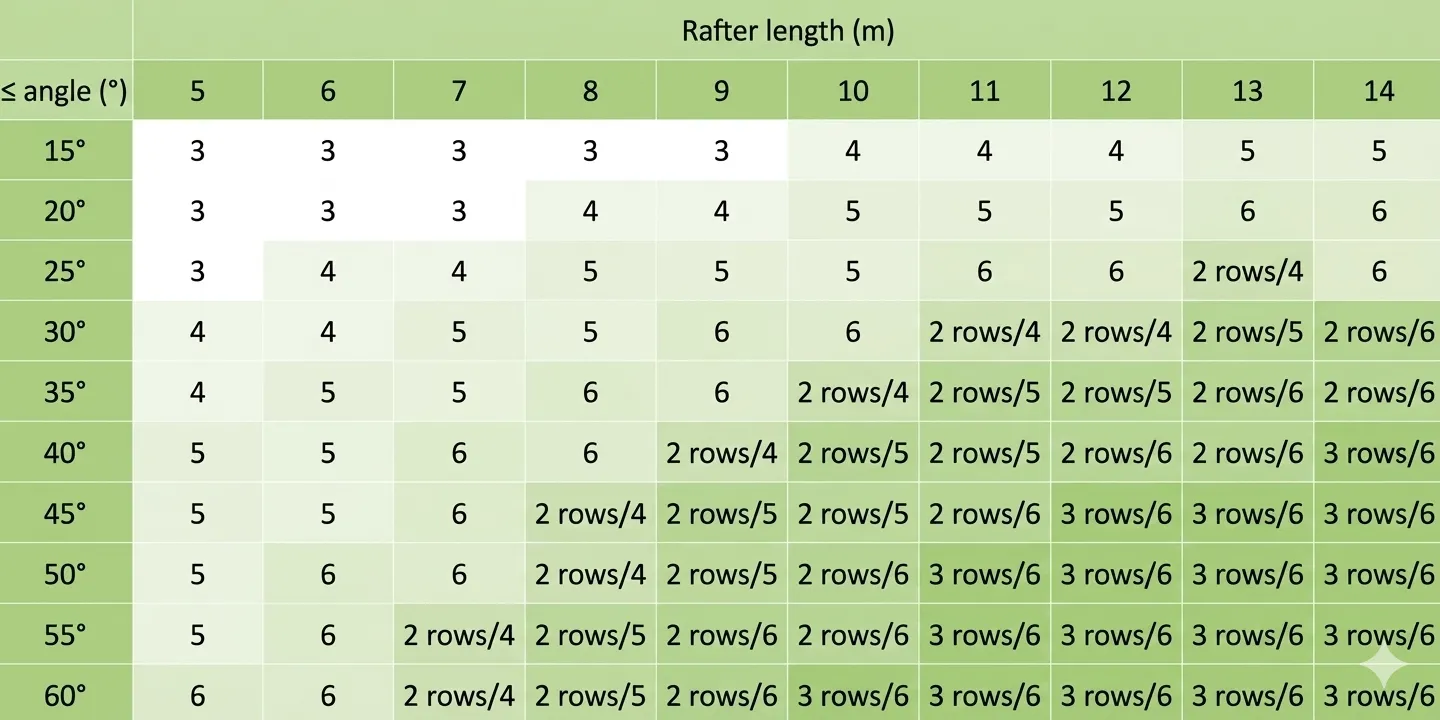
Thanks to the tables and the map, users can easily determine the required number of brackets and the appropriate installation method for their roof. The tables present the recommended number of brackets used for installing snow protection barriers on metal roof tile coverings, depending on the roof pitch angle and the rafter length.
Table 1. Snow protection system with a 2 m barrier width – metal roof tiles.
Table 2. Snow protection system with a 3 m barrier width – metal roof tiles.
Table 3. Snow protection system with a 2 m barrier width – roof tiles.Thanks to the tables and the map, users can easily determine the required number of brackets and the appropriate installation method for their roof.
Tables showing the recommended number of brackets used for installing snow protection barriers on metal roof tile coverings, depending on the roof pitch and the rafter length.


Eurovent® roof snow protection solutions
In response to the needs of contractors, designers and investors, Eurovent® offers a complete roof snow protection system designed for various types of roof coverings. Our solutions are developed with a focus on safety, durability and ease of installation, while complying with applicable construction standards. The product range includes snow fence systems as well as snow guards, together with a wide selection of brackets dedicated to different types of roof coverings.
Why choose Eurovent® snow protection systems?
- Compliance with the PN-EN 1991-1-3 standard,
- High resistance to corrosion and weather conditions,
- System compatibility — all components work together as one integrated system,
- Fast installation and precise adaptation to roof geometry,
- Solutions tested for real snow load conditions.