
Blower door test
– an airtightness test for buildings. A key test for energy-efficient construction.
What is the Blower Door Test?
The Blower Door Test, also known as an airtightness test, is one of the most important tools used in modern construction to verify the quality of thermal insulation and the airtightness of the building envelope. It is essential for energy-efficient houses, passive houses, and buildings designed to meet the requirements of the NF40/NF15 programme, the EU Green Deal, and the low-energy building standard.
Airtightness testing in practice
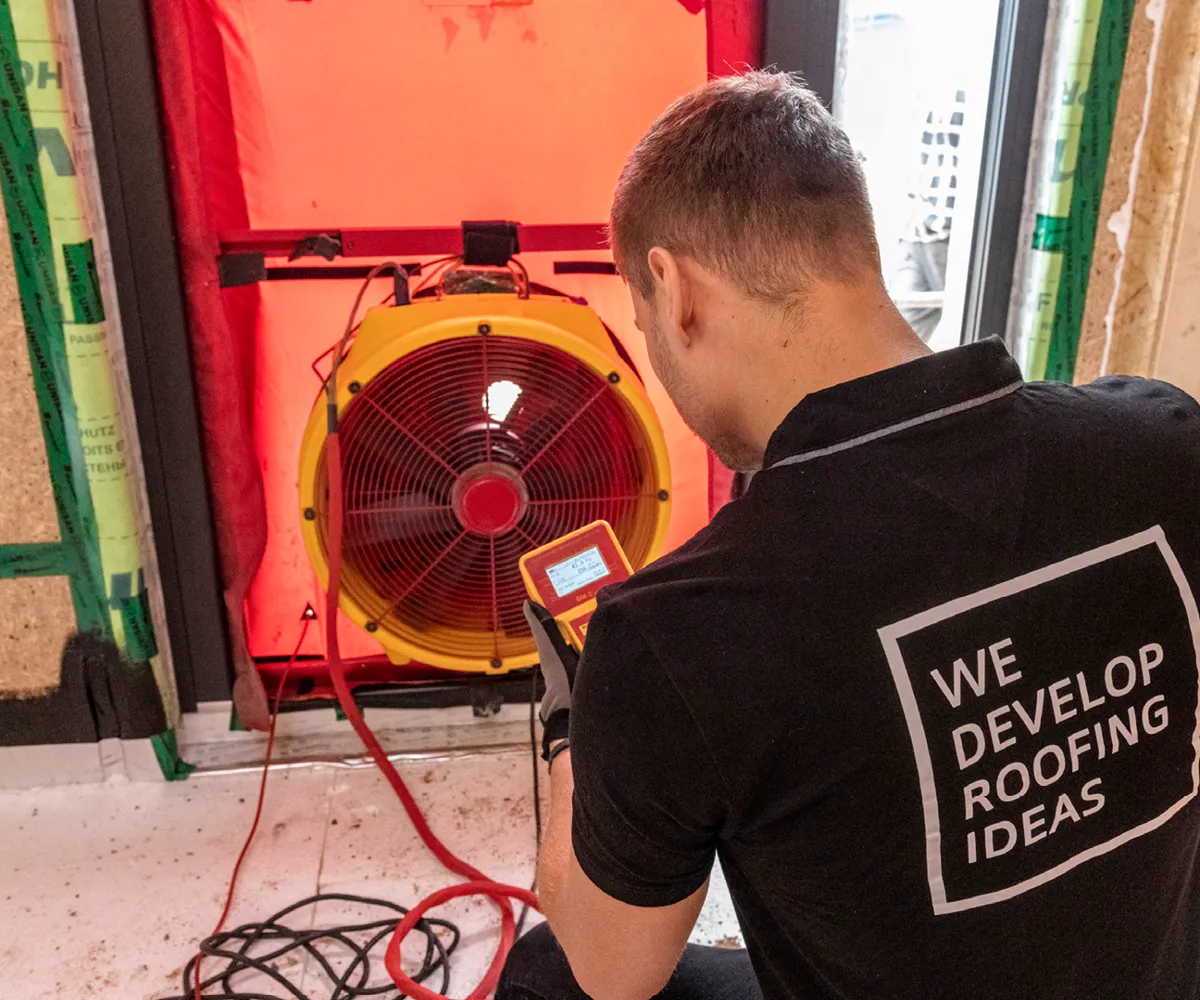
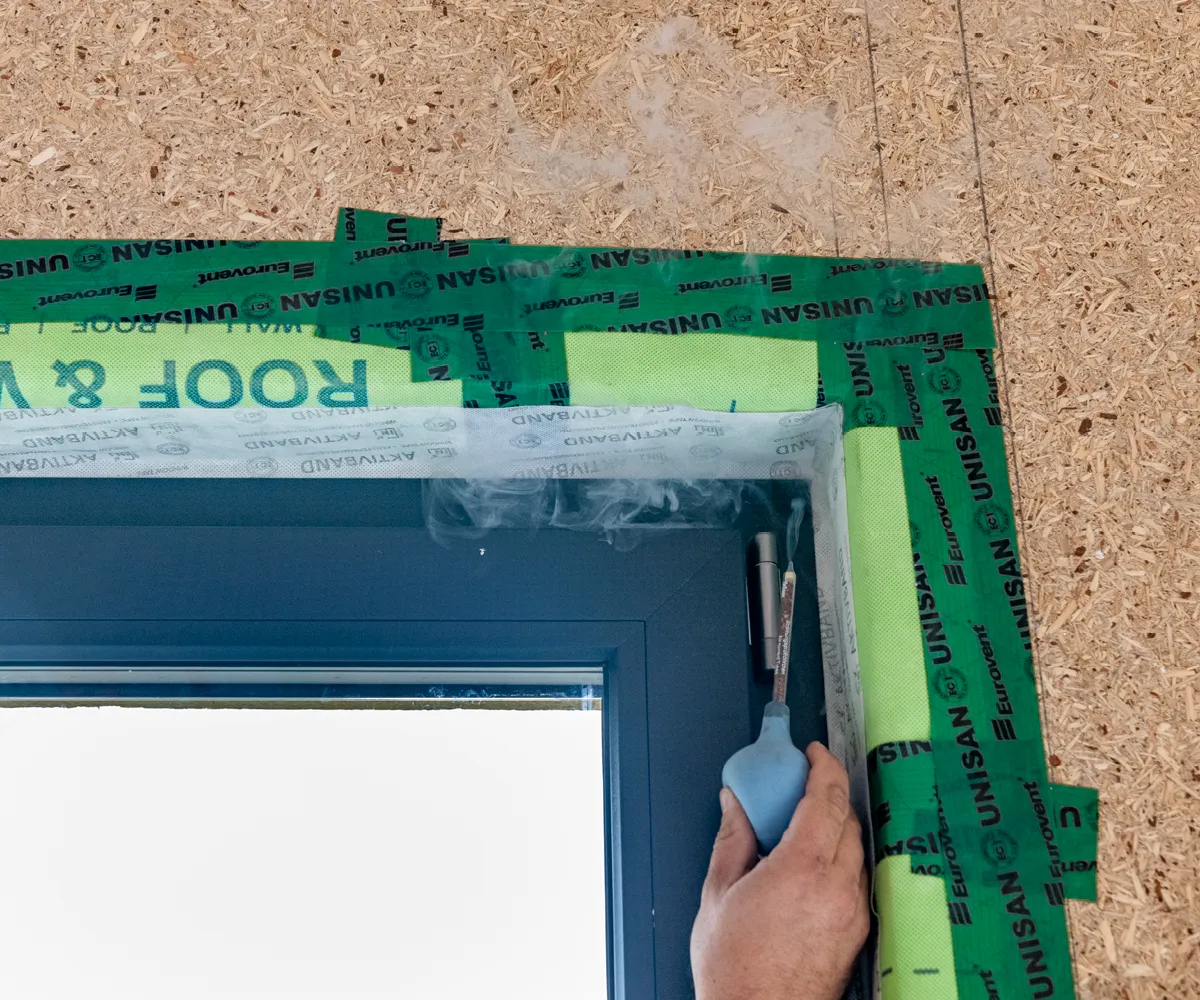
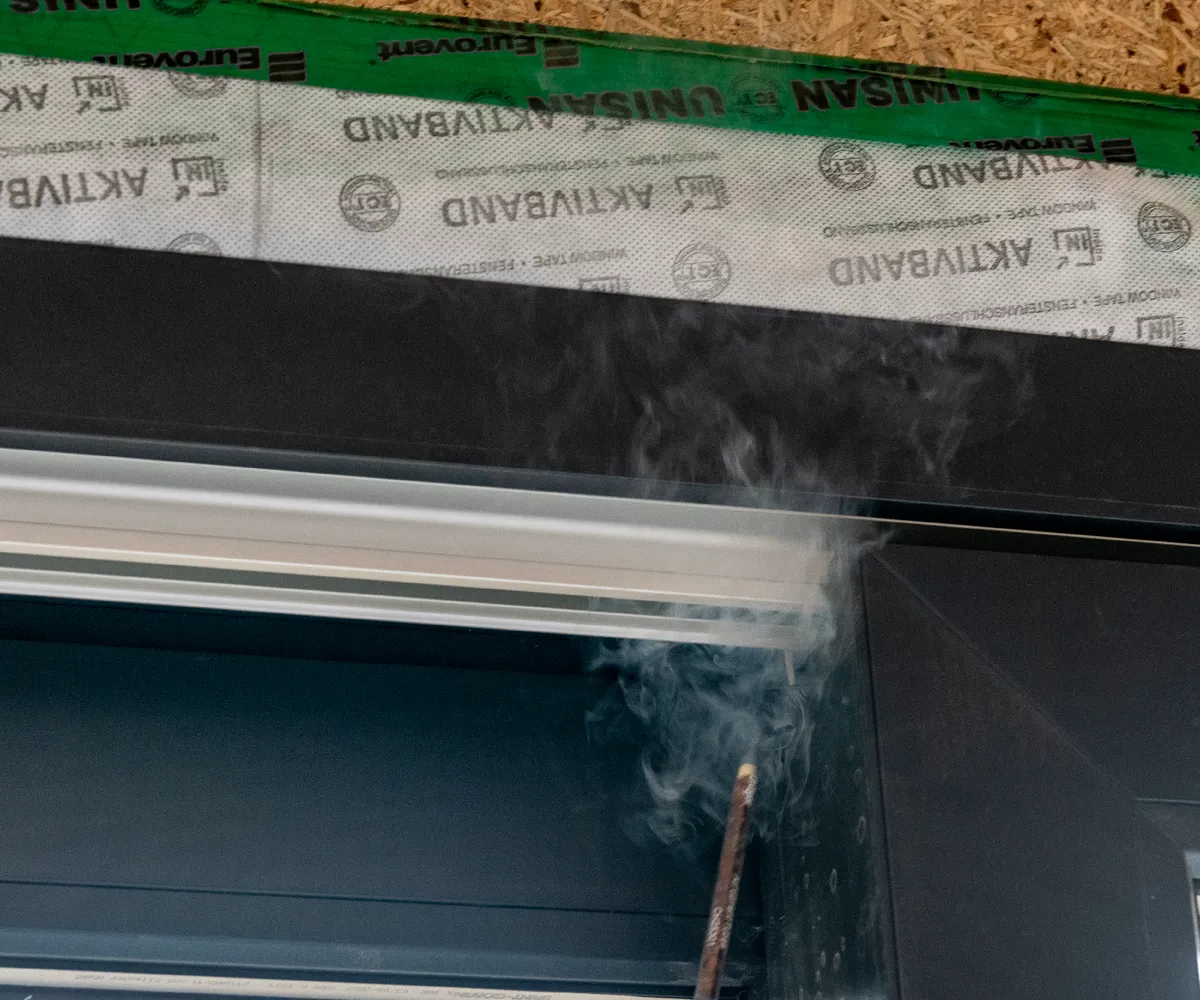
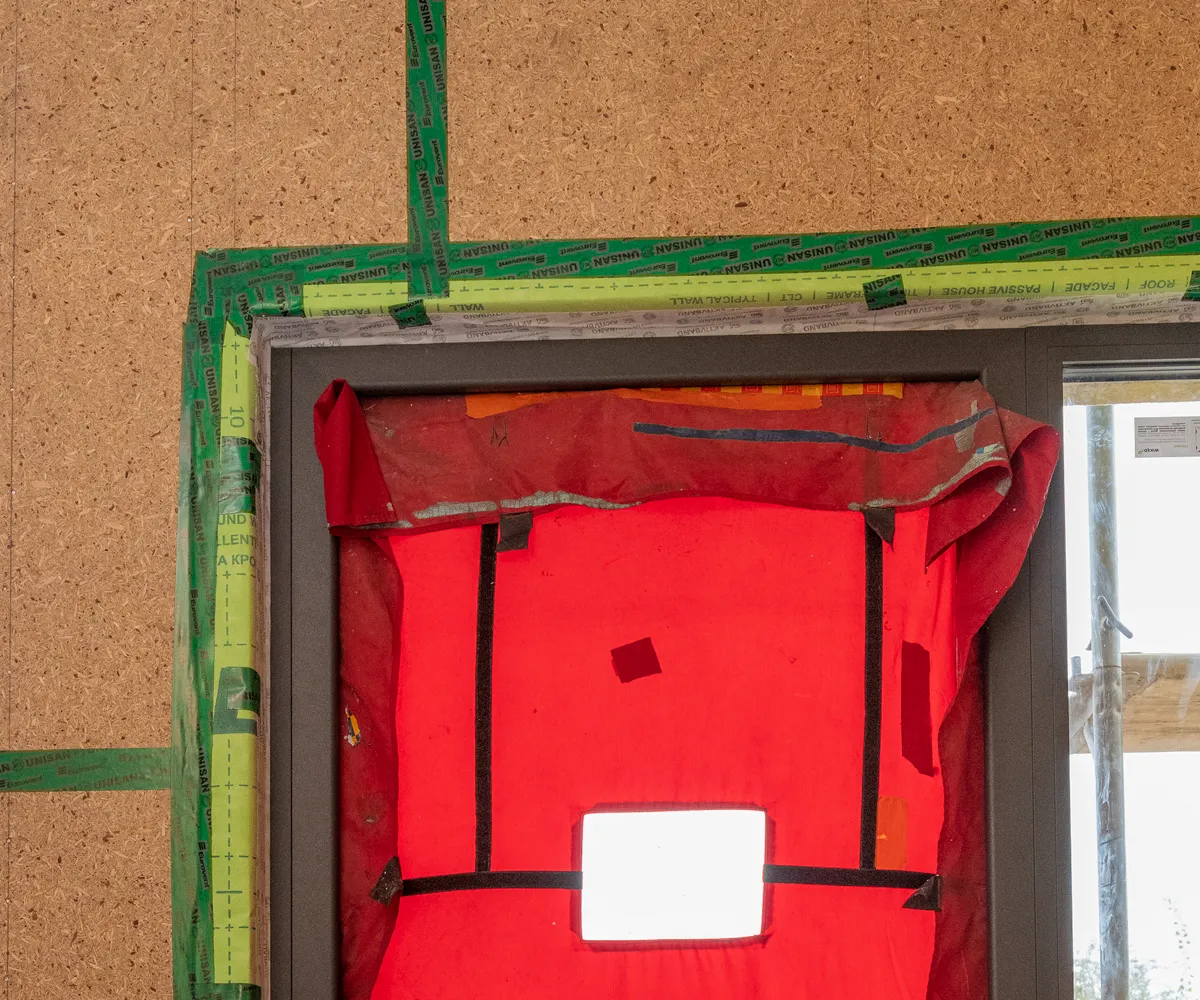
The Blower Door Test is performed by creating a pressure difference between the inside of the building and the outdoor environment using a special fan mounted in a door frame. This makes it possible to measure the amount of air leaking through weak points in the building envelope, such as:
- window and door connections,
- service penetrations,
- roof-to-wall junctions,
- insufficiently insulated ceiling structures,
- damaged membranes and vapour control layers.
The result is expressed as the n50 value [1/h], which defines how many times per hour the total air volume inside the building is exchanged at a pressure difference of 50 Pa.
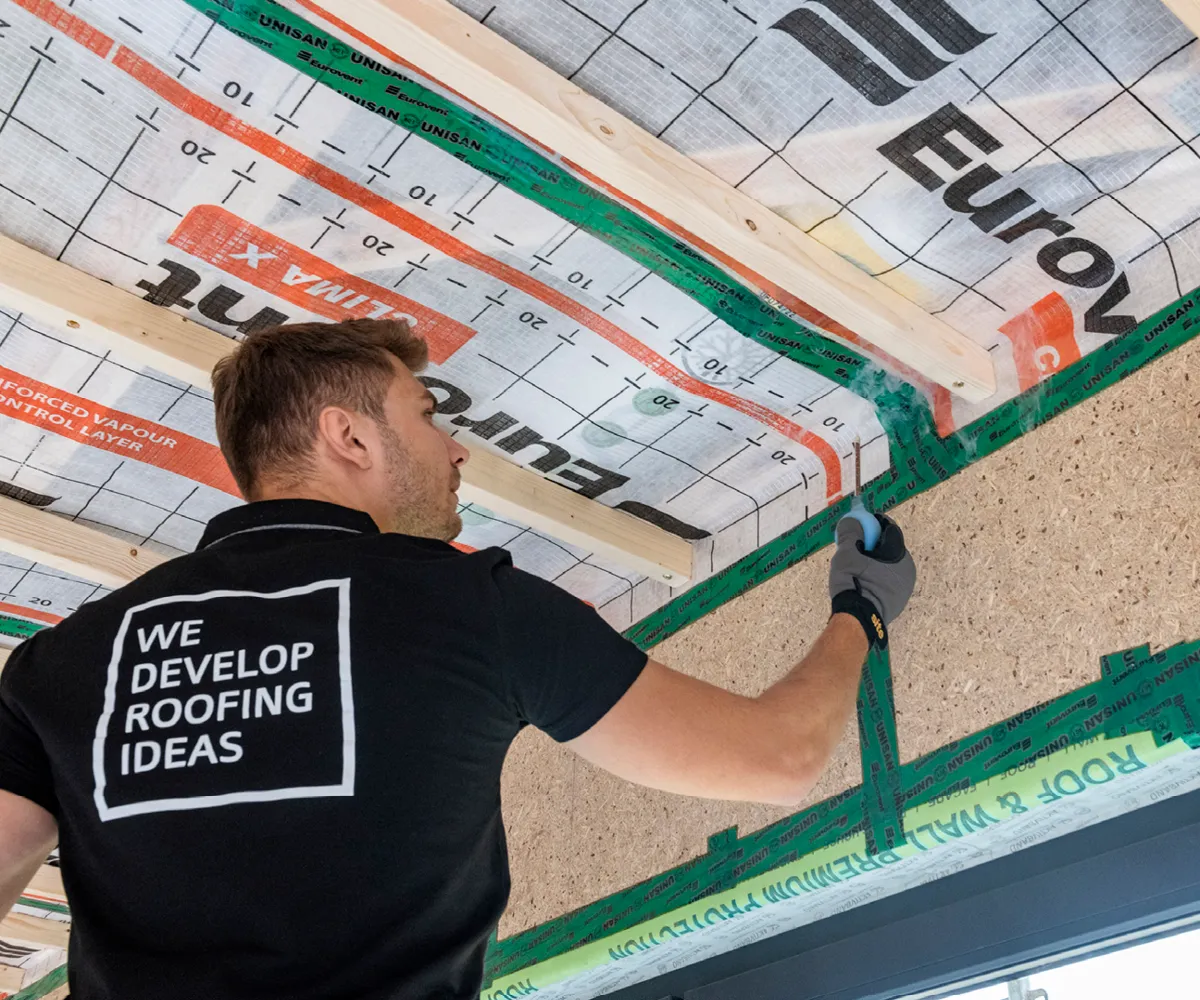
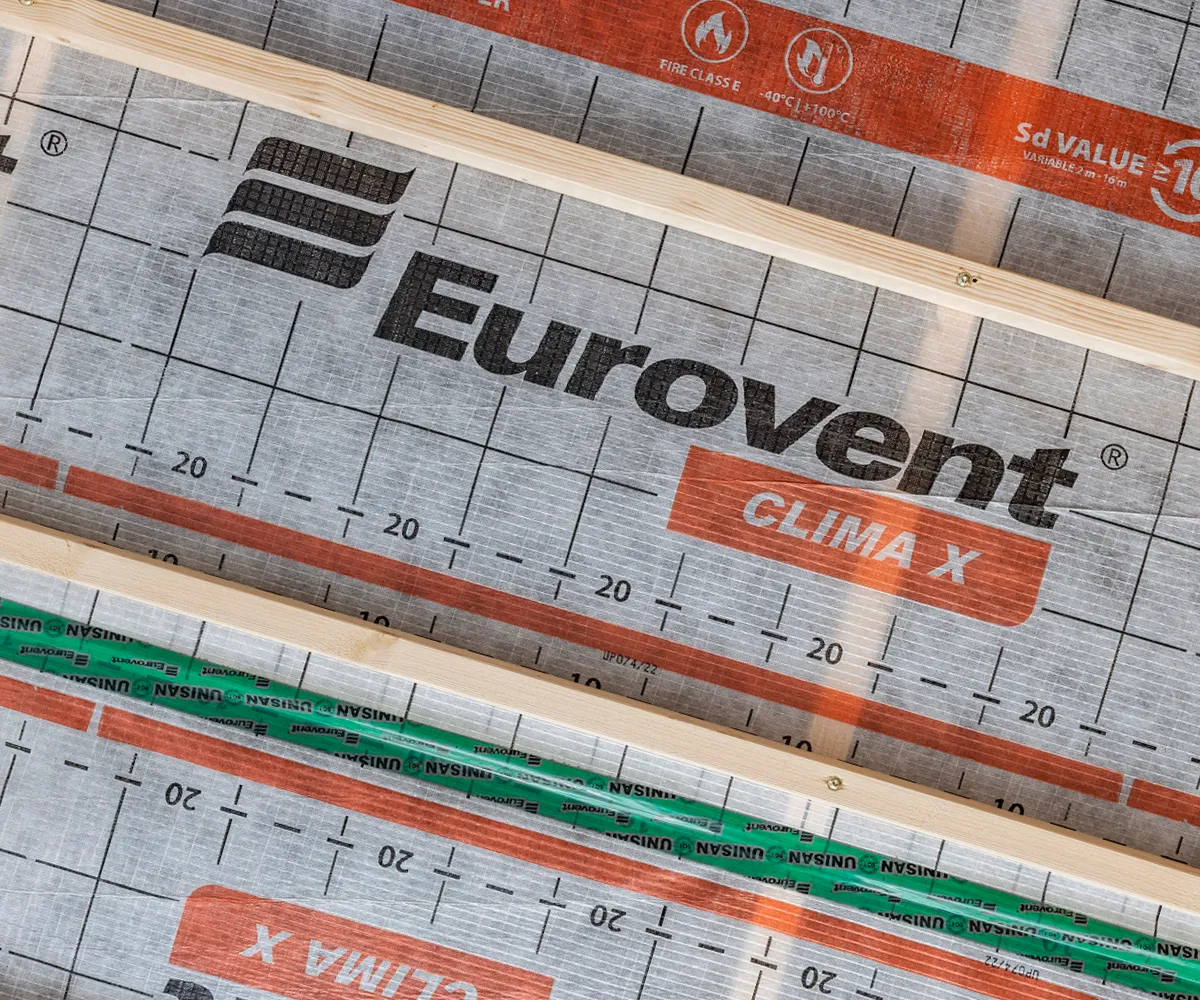
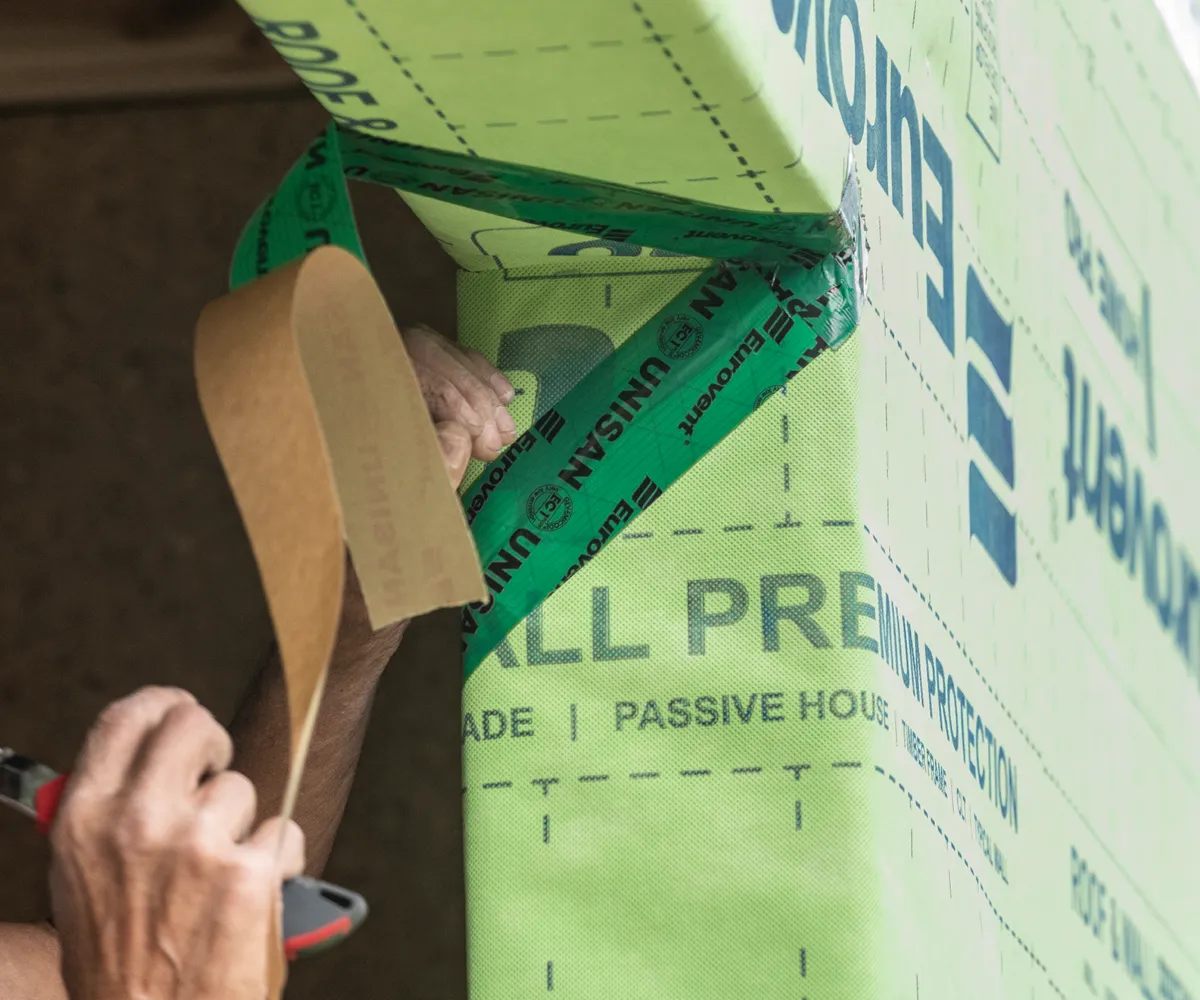
As part of internal testing and performance verification, Eurovent® carried out airtightness test simulations on complete roof and wall assemblies using selected products from its range, including:
- vapour-permeable membranes – such as Eurovent® CLASSIC, SUPER, STRONG, HOME PRO,
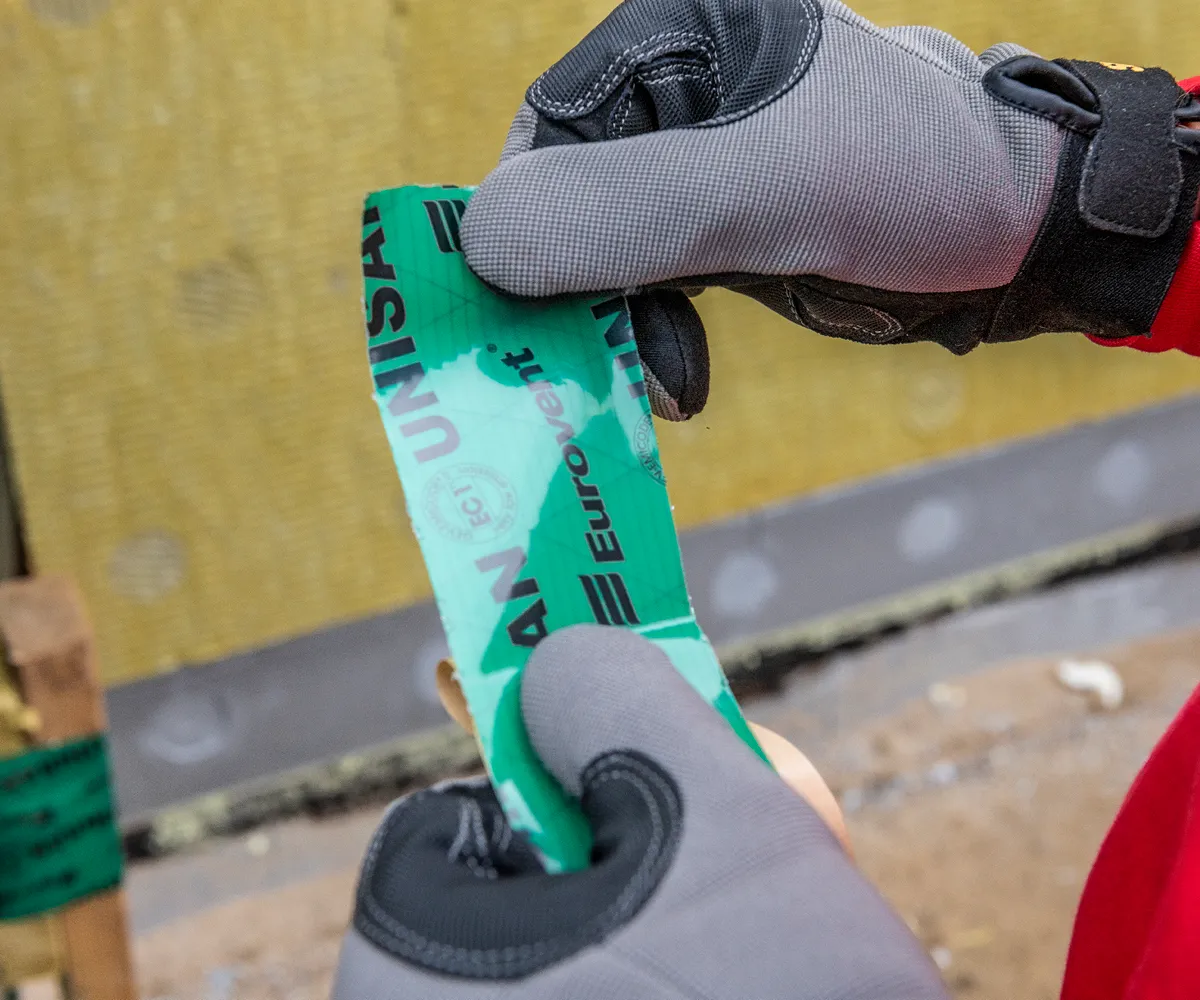
- vapour control membranes – Eurovent® CLIMA, UNISAN, CLIMA X, AKTIV ALU,
- adhesive and sealing tapes – Eurovent® UNO, DUO, FAST, HYDRAL, MULTI SEAL,
- window sealing tape systems – Eurovent® DIFFUBAND SK, AKTIVBAND SK2,
- sealing collars – MINI SEAL, SEAL PRO.
The results confirmed the high effectiveness of Eurovent® products in reducing air leakage and achieving very low n50 values, meeting the requirements of passive and energy-efficient construction.
Blower Door Test

Why is airtightness testing so important?
Airtightness testing is a key part of modern energy-efficient construction. It helps identify leaks that can negatively affect the thermal performance, durability and indoor comfort of a building.
- Lower heat loss and reduced energy costs
- Improved protection of the structure against moisture damage
- Compliance with energy-efficient and passive building standards
- Reliable verification of the performance of membranes, vapour control layers and sealing systems
The quality of every connection, joint and sealing detail matters. That is why properly selected and correctly installed Eurovent® solutions play such an important role in achieving a durable and airtight building envelope.



Environmental Product Declaration
We have received an Environmental Product Declaration (EPD) Type III ITB
When should the Blower Door Test be carried out?
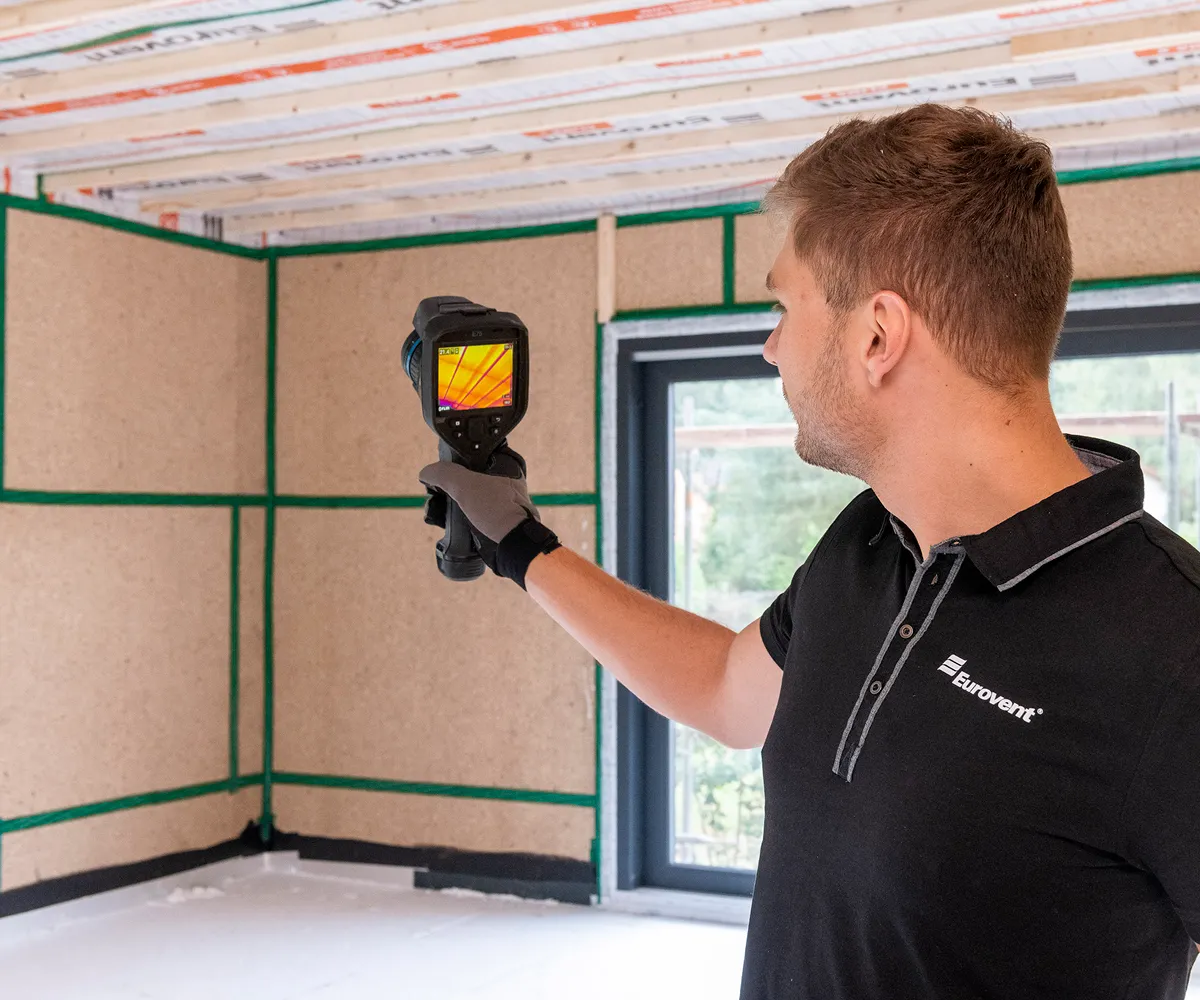
The Blower Door Test should ideally be performed once all insulation layers and vapour control membranes have been installed, but before the building structure is closed and the interior finishing works begin. At this stage, the test allows contractors and investors to:
- identify and correct air leaks while construction is still in progress,
- verify the correct application of tapes, membranes and sealing systems,
- document the quality of the completed work for the investor or energy auditor.
The Blower Door Test is more than just a formal procedure. It is a practical quality control method that verifies both workmanship and the performance of the insulation system used. When combined with high-quality Eurovent® solutions, it becomes a clear confirmation of the building’s energy efficiency, airtightness and installation quality.
Join the newsletter
Contact
CONTACT


Search
Favourites
No favourites